Why an SEO Company Should Build Your Website, Not Just Optimize it Afterwards
Here is a conversation I have had more times than I can count.
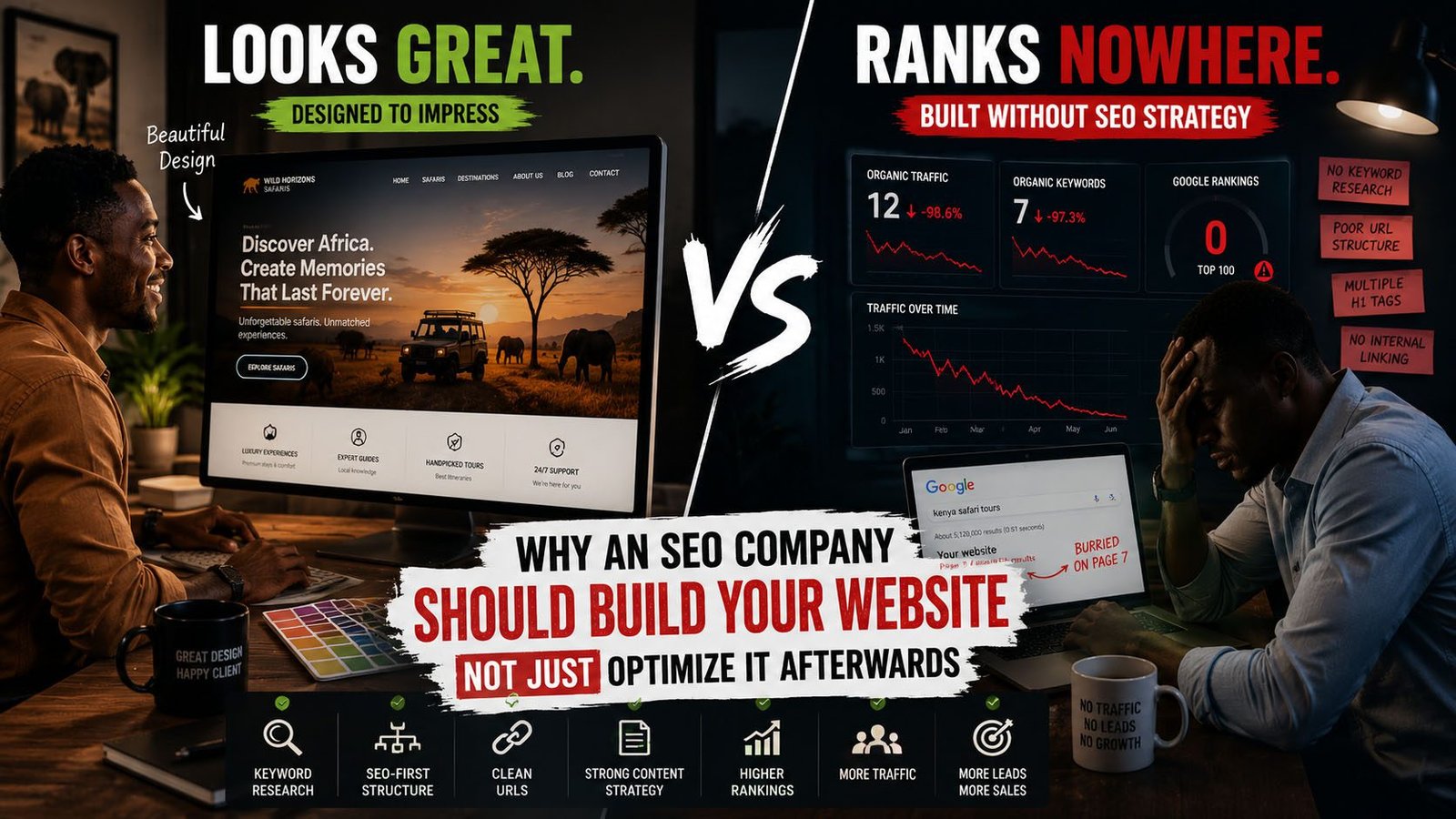
A business owner calls me. They launched a new website six months ago. They spent good money on it. It looks great. The designer did a fantastic job. But the site is not ranking. Organic traffic is almost zero. And when they look at it from an SEO perspective, the problems are everywhere. The homepage has three H1s. The service pages have no keyword targeting behind them. The URL structure makes no sense for search. The most important conversion elements are buried at the bottom of pages nobody scrolls to.
And now they want me to fix it. Which I can do. But fixing a website that was built without SEO in mind is almost always more expensive and more disruptive than building it right the first time. You are not just adding things. You are restructuring pages, rewriting content, changing URLs, updating navigation, and potentially rebuilding the whole information architecture from scratch.
This is why I believe, genuinely, that an SEO company should be leading the website build. Not involved after. Leading it.
The Problem With How Most Websites Get Built
The standard process goes like this. A business decides they need a new website. They hire a web design company or a freelance designer. The designer asks for the brand colours, the logo, maybe some photos and a rough idea of what pages they want. The designer builds something that looks good and hands it over. Then, at some point later, the business owner thinks about SEO and either hires someone or starts reading about it.
By that point, the structural decisions have already been made. The URL slugs are set. The heading hierarchy is whatever the designer thought looked right. The page structure follows a visual logic, not a keyword logic. The content, if there is any, was written by someone who has never done a keyword gap analysis in their life.
The design company did their job. The website looks clean and professional. But from a search engine perspective, it is starting from zero. Sometimes it is worse than zero because poor structure actively creates problems that need to be unwound.
SEO and Web Design Are Not Separate Conversations
When an SEO company builds a website, or leads the strategy behind one, the entire approach changes. Every decision about structure is made with search intent in mind.
What pages should exist? That answer comes from keyword research, not from guesswork. You look at what your target customers are actually searching for, what terms have real volume, which keywords signal buying intent, and then you build pages around those. Every page has a reason to exist because there is a search query it is designed to answer.
What should the URL structure look like? Again, keyword research drives this. A safari company should not have URLs like /page-1 or /tour-a. The URL should contain the keyword the page is targeting. Something like /serengeti-migration-safari-7-days is both descriptive for users and carries keyword relevance for Google.
What should the H1 say on each page? An SEO company knows that every page gets one H1, that it should contain the primary keyword for that page, and that it should be written to match search intent. Not just to sound nice or match the brand tone, but to tell Google immediately what this page is about.
None of this happens naturally when a designer is leading the build. It is not their fault. It is just not their job.
The Blueprint Model: If You Do Not Have Designers, Do This
Not every SEO company has strong web designers in house, and that is fine. The solution is not to skip SEO and hire a designer. The solution is to do the SEO work first and hand the blueprint to the designer.
What does that blueprint look like? It is a complete document that covers every page on the site. For each page it specifies the URL, the H1, the target keyword, the page structure with H2 sections laid out, the meta title, the meta description, the primary CTA, and the core content. The designer gets this document and their job becomes bringing it to life visually. They are not making structural decisions. They are making design decisions, which is what they are good at.
This model produces the best results because everyone is working in their area of expertise. The SEO company handles architecture and content strategy. The designer handles visual execution. The final product looks great and is built to rank.
I have seen this work extremely well, especially for businesses in competitive niches where the website is a primary revenue channel. When the two disciplines are separated properly, the output is better than when one team tries to do both without expertise in the other.
The Form Versus Function Debate
There is an ongoing argument in the industry between people who prioritize how a website looks and people who prioritize how it performs in search. In my experience, the people who argue hardest for pure aesthetics are usually designers, and the people who argue hardest for pure function are sometimes SEOs who underestimate how much presentation affects conversion.
The reality is both matter. But they matter in a specific sequence.
Form without function means you have a beautiful website that nobody finds. You can spend months perfecting the design, the animations, the colour palette, and the typography. But if the site structure is not built for search, and the pages are not targeting keywords that real people use, the site will sit there attracting almost no organic traffic regardless of how good it looks.
Function without form means your site might rank but it does not convert. Visitors arrive and do not trust what they see. The user experience is poor. They leave.
The answer is to build the function first, meaning the SEO architecture, keyword targeting, page structure, and content, and then wrap excellent design around it. You do not compromise the SEO foundation to make things look prettier. You find a way to make them both work together. In most cases that is completely achievable. A site can be visually beautiful and structurally sound for search at the same time. But the SEO structure has to come first because it is much harder to retrofit than it is to build in from the start.
CRO: The Part Most Websites Get Completely Wrong
Conversion rate optimization, CRO, is about making sure that the traffic your site gets actually turns into leads or bookings. And this is where the gap between designer-led and SEO-led builds shows up most clearly.
When a designer lays out a page, they often put the most visually striking element at the top. A big hero image, a beautiful full-screen photo, sometimes a video background. This looks impressive. But on mobile, which is where most of your traffic is coming from, that hero section takes up the entire screen and pushes everything else down. The phone number is not visible. The call to action is not visible. The value proposition is not visible. The user has to scroll before they see any reason to stay or take action.
An SEO company approaching the same page thinks differently. What does this user need to see immediately when they land here? They need to know they are in the right place, they need a clear reason to trust the business, and they need a direct path to take action. That means the H1 is above the fold and tells them exactly what the page is about. The phone number is in the header, visible on every page on every device. The primary CTA button is above the fold. On a tour or safari page, that might be an enquiry button or a book now button that does not require the user to scroll to find.
There should be only one H1 per page. This is basic SEO hygiene but I still find multiple H1s on the majority of websites I audit. The H1 is the most important heading signal on the page. Having two or three of them confuses Google about what the page’s primary topic is.
Trust signals need to be positioned strategically. Reviews, certifications, years in business, client logos. These should not live only at the bottom of the page. They should appear near CTAs, near pricing sections, near enquiry forms, because that is where hesitation happens and that is where trust needs to be reinforced.
Internal linking also serves double duty. Good internal links help Google understand your site structure and distribute authority between pages. They also guide users deeper into the site, increasing engagement and reducing bounce rates. A designer thinks about navigation. An SEO company thinks about navigation and the entire internal linking ecosystem.
What You Actually Get When SEO Leads the Build
When an SEO company builds your website, or properly leads the strategy behind it, you get a site where the pages that need to rank are structured to rank from day one. You are not spending the first year fixing problems that should never have existed.
You get a site where every page has a clear purpose tied to a keyword that real people search for. You get a site where the technical foundation, the heading hierarchy, the schema markup, the sitemap, the internal link structure, is all set up correctly before the first visitor arrives.
And because the content and structure came first, the design work your designer or developer does is building on a solid foundation rather than making decisions that SEO will have to fight against later.
The website is not a design project that later needs SEO. It is an SEO project that also needs great design. Getting that sequence right is the difference between a website that is an asset and one that is just an expense.
If you are planning a new website or a redesign, talk to us before you talk to a designer. We will build you the blueprint so that whatever gets built looks great and works the way it should….we do build too